Freedom Has Always Been a Story Problem
On Juneteenth, voice, and why the most important words aren't always written by the people who lived them.
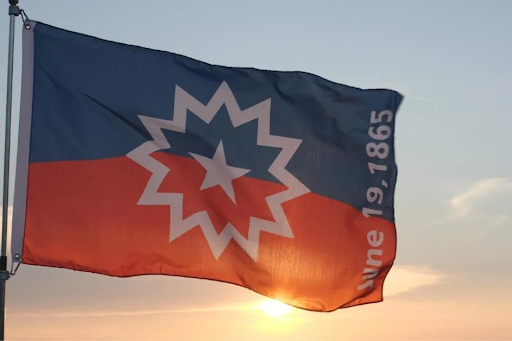
The Juneteenth flag, designed by activist Ben Haith in 1997; a symbol of Black liberation, remembrance, and freedom.
There is a profound kind of power in being the person who holds the pen for someone else.
It is the quieter, weightier power of being trusted with someone else’s truth. Of sitting across from a person whose story is too large, too layered, or too important to stay inside them and being handed the task of getting it out right.
That responsibility has led me to my own exploration of what it means for creatives to bear witness. And by bearing witness, we often leave blueprints. James Baldwin named this tension before I ever had words for it:
“I was never in town to stay. This was sometimes hard on my morale, but I had to accept, as time wore on, that part of my responsibility, as a witness, was to move as largely and as freely as possible. To write the story, and to get it out.” (I Am Not Your Negro, 2016)
I think about that permission every time the world insists I should niche down, choose a lane, and stay there. I choose not to write just one way. I can’t write just one way. The story that needs daylight is the one I move toward next.
I’ve been doing this work for nearly two decades. Ghostwriting for executives, faith leaders, nonprofit founders, and public figures. Helping people find language for the thing they've been trying to say. And every Juneteenth, without fail, I come back to the same question that grounds everything I do:
Who gets to tell the story? And what is lost when the wrong person does?
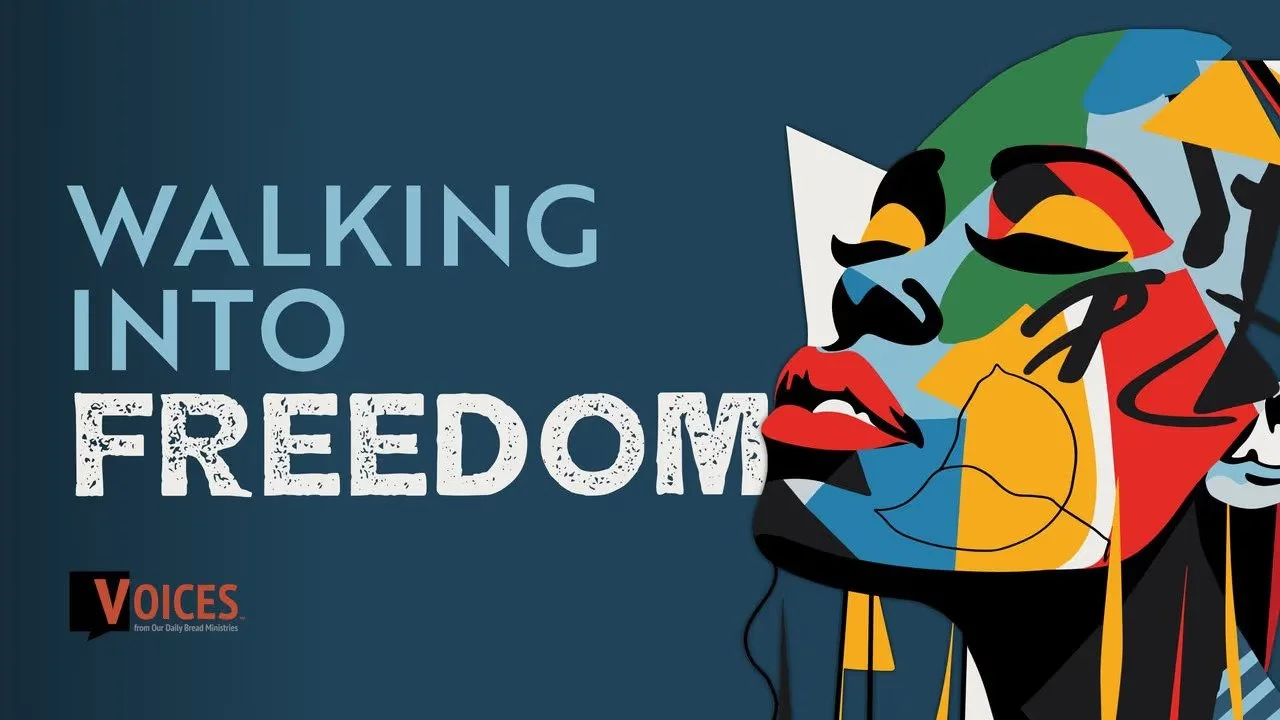
Walking into Freedom — a 10-day Juneteenth devotional series from Our Daily Bread's VOICES collection, centering Black faith and liberation.
This year, I had the profound honor of being included in Our Daily Bread's Walking into Freedom, a 10-day Juneteenth devotional series published through their VOICES collection. Ten days. Ten entries. Ten writers centering the faith, resilience, and liberation testimony of Black Americans.
My entry is called "Celebrate to Resist and Remember."
And I wrote it with Lulete Mola, the Co-Founder and President of the Black Collective Foundation MN, at the center.
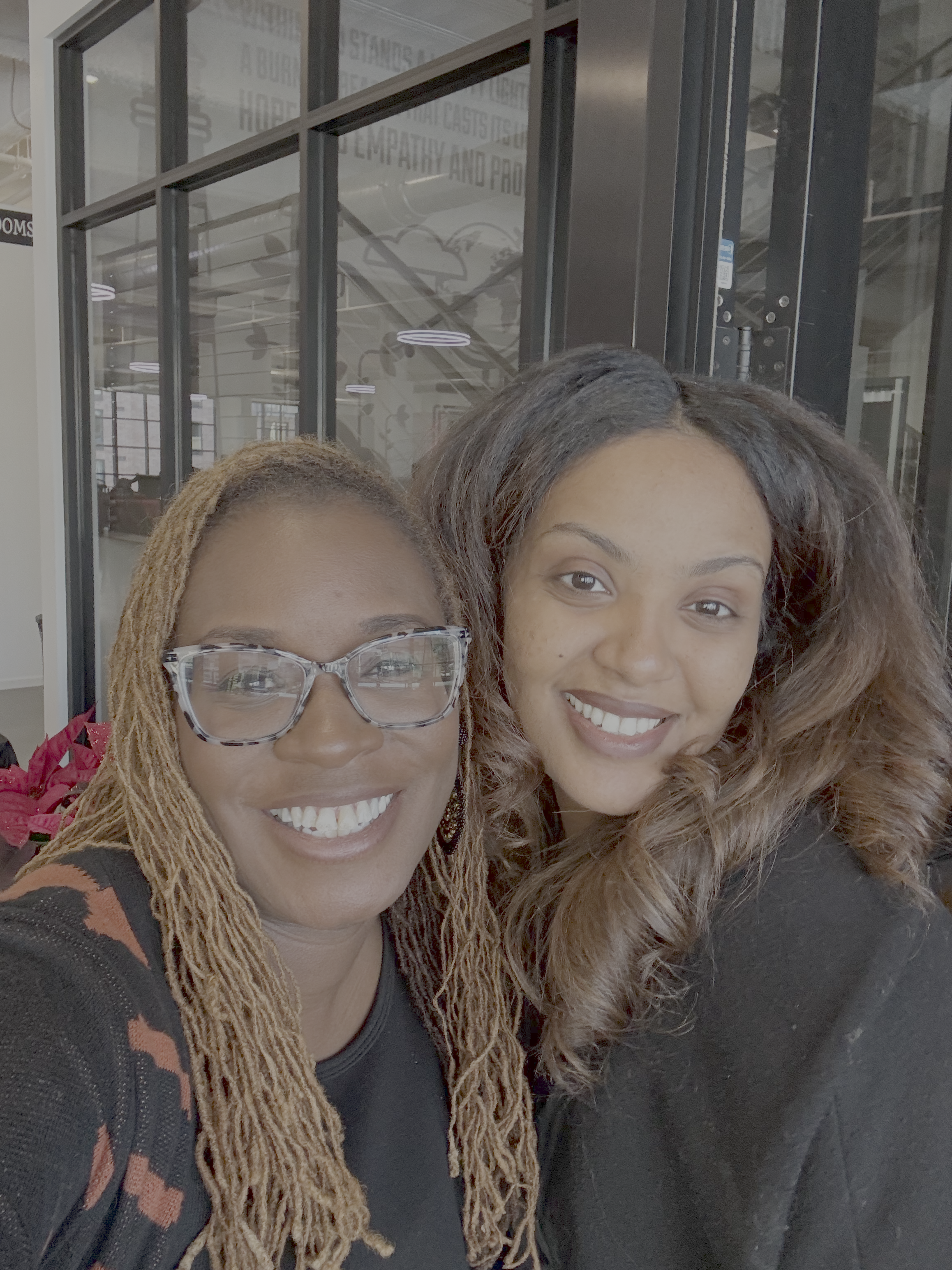
E. Danielle Butler, Executive Storyteller and ghostwriter, with Lulete Mola, Co-Founder of Black Collective Foundation MN.
I’ve witnessed her efforts towards advancing culturally specific philanthropy in her region and beyond. I’ve observed her leadership in difficult times as she ran to the front lines of challenging but necessary conversations. And I’ve also had the pleasure of attending one of her Rooted & Radiant Juneteenth celebrations.
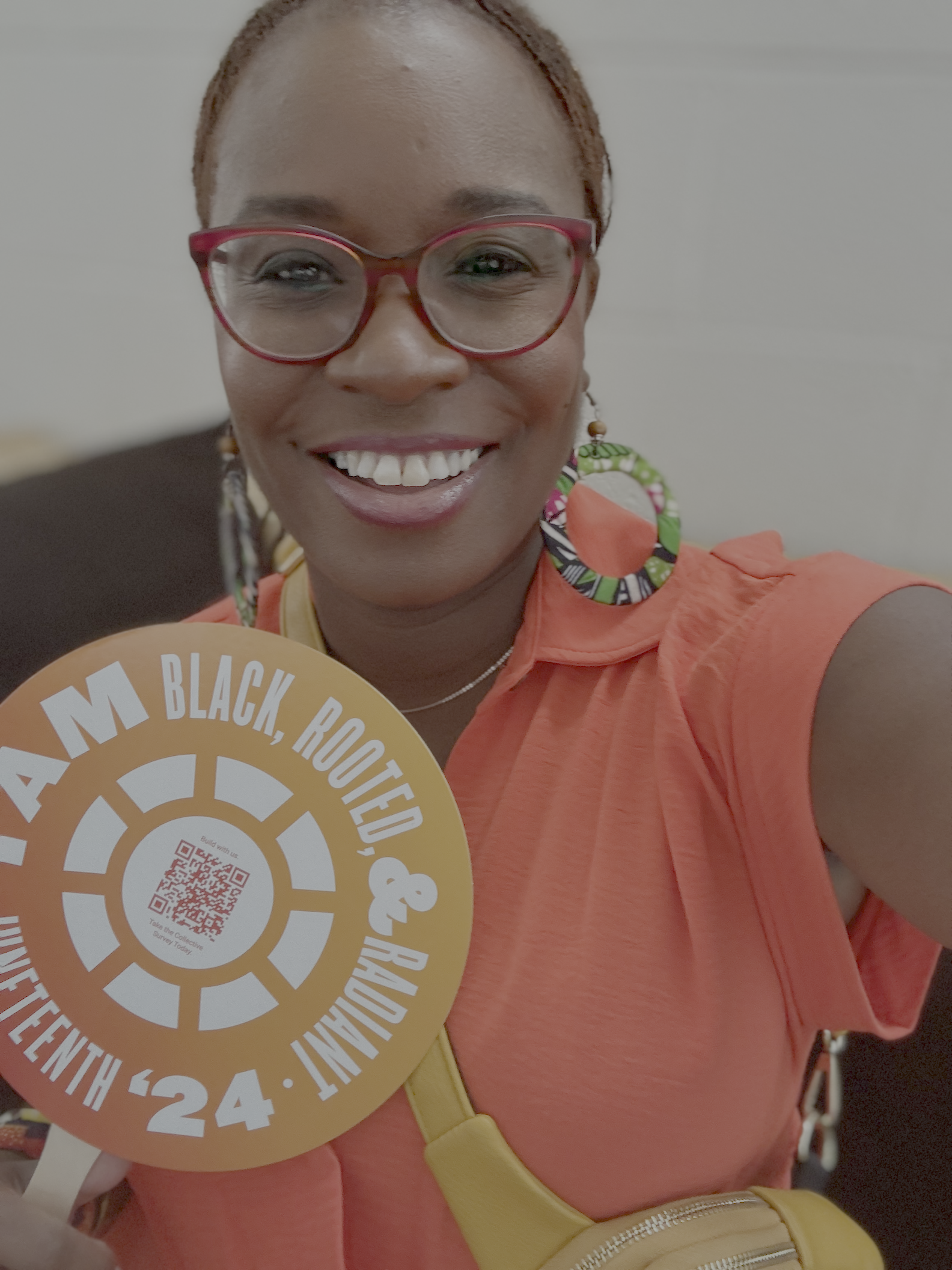
E. Danielle Butler at Rooted & Radiant Juneteenth 2024, hosted by the Black Collective Foundation MN.
Writing my entry reminded me: sharing someone's story faithfully is itself an act of liberation. When we get it right we give that truth a longer life than memory alone can hold.
That is not a small thing. That is the whole thing.
Here's what I know about freedom and storytelling that Juneteenth keeps teaching me:
Freedom Is Not Self-Announcing
June 19, 1865, the day enslaved people in Galveston, Texas finally received word that they were free, was two and a half years after the Emancipation Proclamation. The liberation had already happened. The story just hadn’t reached everyone yet.
Which means the telling was part of the freedom.
The moment the message arrived, something changed. Not the legal reality, but the lived reality. The story reaching the people it was meant for is what made freedom real.
I think about that every time I sit down to write for someone else.
The leaders I work with, executives, faith figures, movement builders, often come to me carrying something they cannot quite name. They know the work they've done. They know what they've seen, survived, and built. But they haven't yet found the words that make other people feel the weight and the significance of it.
That's not a failure of intelligence. It's not even a failure of communication. It's a recognition that some stories need a craftsperson. A translator. Someone who can hold a truth steady while they shape it into language that travels.
What It Means to Be an Executive Storyteller
I'm a narrative sculptor. I dig into the story that was always there — the one living underneath the resume, the title, the years of work and sacrifice — and shape it into language that finally travels. The right story, told with the right precision, is a strategy. A legacy. A form of leadership in itself.
My devotional entry is the final entry in Walking into Freedom. I hope you’ll read it not because my name is attached to it, but because celebration is an act of resistance and remembrance.
Because Juneteenth was never just a holiday. It was a tipping point. A story that finally arrived.
Because freedom, as the holiday itself reminds us, is only complete when the story reaches the people it belongs to.
There’s more to the story. There always is.
If you’re a leader carrying a story that deserves more than a LinkedIn bio, let’s talk. Book a consultation at EDanielleButler.com.